Always keep the precise reference of the documents you use in your research, to avoid having to return to them afterwards.
by reading: note the source, the page,
by attending a conference: note the speaker, the title of the conference, the date
by watching a video: note the author, producer, web page address...
Make sure there are no gaps in the references (missing elements such as date, page).
reread your notes and add to them regularly
check "copy and paste
Take advantage of bibliographic management software like ZOTERO or Mendeley (free); BibTeX (for LaTeX - free); Endnote (paid),
Find a selection of tutorials on our Zotero workshop page
This software is very practical for all stages of the process
complete the precise information associated with an extract or idea
associate note-taking with pdf,
associate the pdf with its bibliographic reference
insert references directly as footnotes or in author-date format, depending on the style chosen for your text
insert a bibliography in the chosen style.
During the writing process
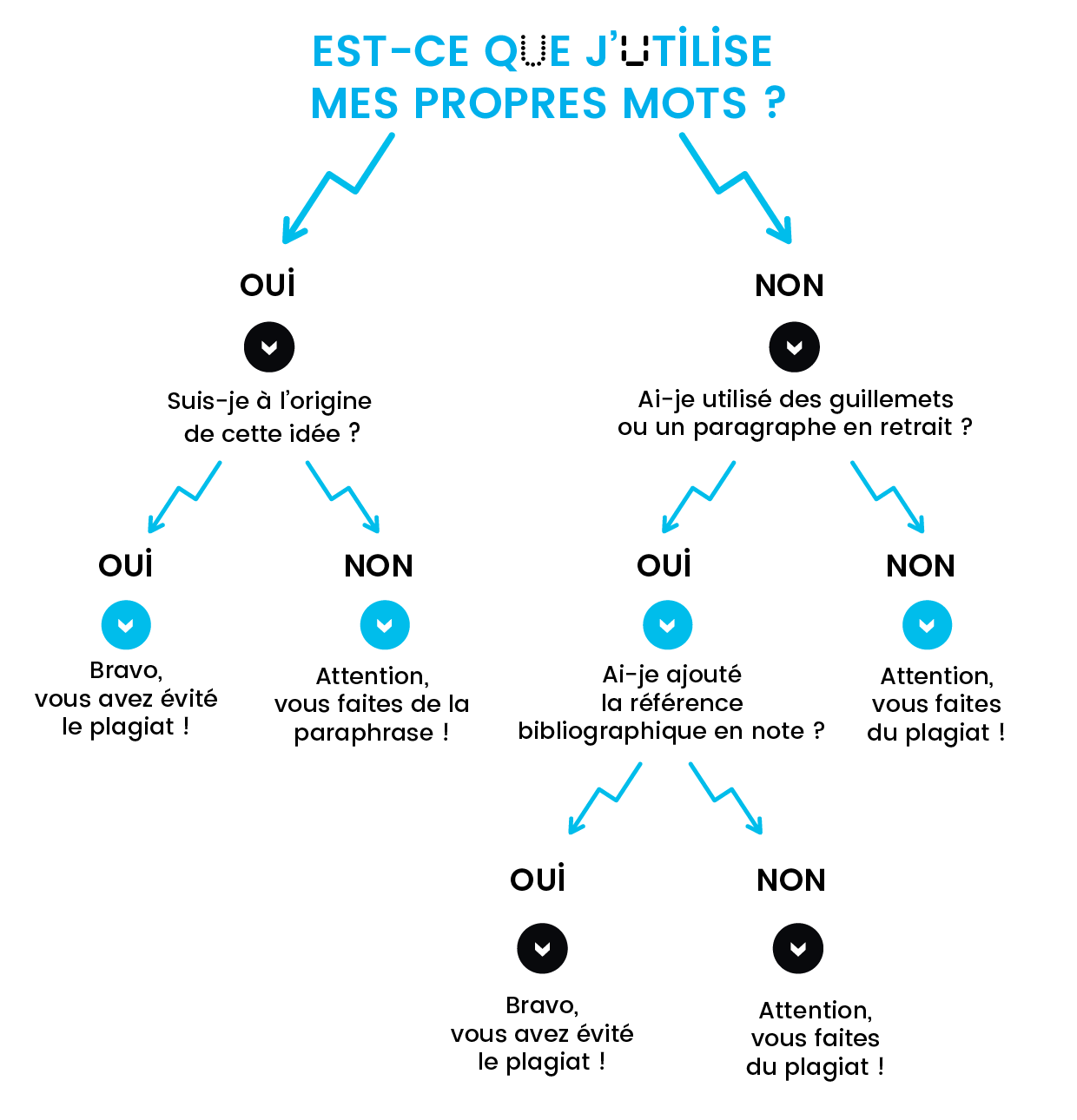
Cite only documents for which you have complete and precise references (author, title, date, etc.).
Start with the original source of the idea, not with subsequent authors.
"Quote only documents you've had your eye on and used, not documents quoted by someone else. If you quote someone quoted by someone else, say so."(source)
Present your references in the body of the text and your bibliography in a coherent and consistent manner.
Don't quote the same source too often, as this may show a lack of research or openness.
Don't overuse quotations or paraphrases, to the detriment of your analysis and personal work, even if... "When in doubt, it's always better to quote (better a useless quotation - and they rarely are - than a case of proven plagiarism)".
Share linkCopyCopyClose modal windowShare this page URLI recommend this page:Available at this address :The page will then be accessible from your "My favorites" menu.Stop videoPlay videoMute soundPlay soundChat: Got a question?Chatbot Robo FabricaMatomo visitor statisticsX (formerly Twitter)